Kent has always been England’s front door. It is the closest county to the continent, and every power that ever eyed England, from Rome to Napoleon to Hitler, planned to come this way. The result is that Kent’s castles are not a random scatter of old buildings but a complete timeline of coastal defence: Roman walls folded into Norman keeps, medieval strongholds, Henry VIII’s gun forts and Elizabethan batteries. This page covers the castles we have written about in depth, plus the others worth knowing about.
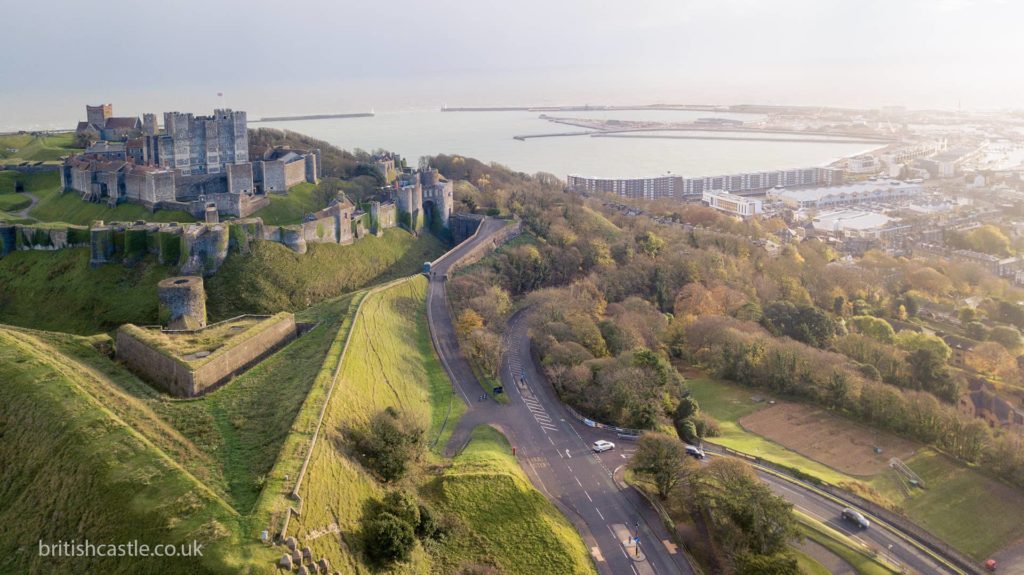
Dover Castle
The big one. Dover Castle watches the shortest sea crossing to France from the top of the White Cliffs, and there is over 2,000 years of defence layered on one site: a Roman lighthouse, a Saxon church, Henry II’s great square keep, medieval underground works and the World War II tunnels from which the Dunkirk evacuation was directed. If you only visit one castle in Kent, it is this one, and it needs a full day.
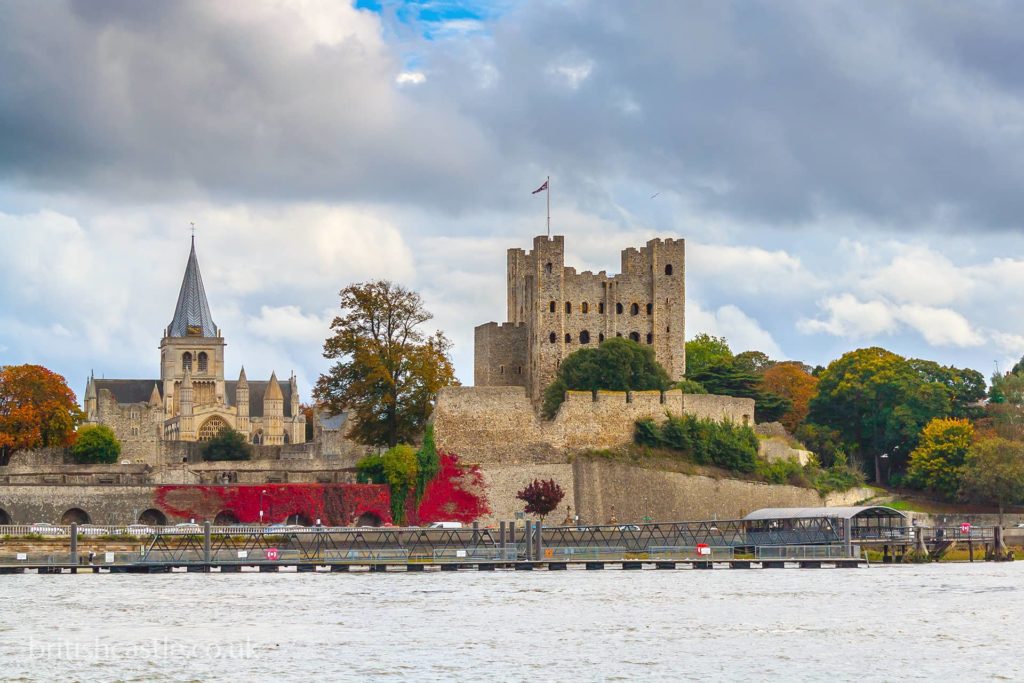
Rochester Castle
Rochester Castle has the tallest Norman keep in England, guarding the point where the Roman road from Dover to London crossed the River Medway. It was the scene of one of the great sieges of English history, when King John’s engineers brought down a corner of the keep in 1215 using tunnels propped with pig fat, and the round tower rebuilt afterwards still gives the keep its mismatched corner.
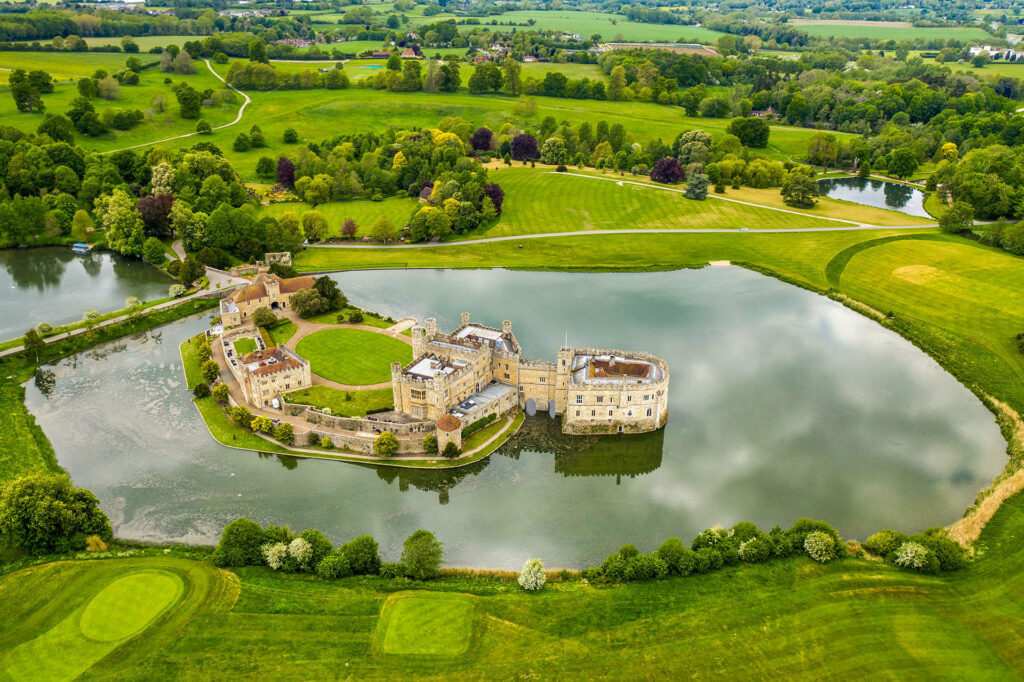
Leeds Castle
Leeds Castle stands on two islands in a lake near Maidstone, and is regularly called one of the loveliest castles in the world. Despite the name it has nothing to do with the Yorkshire city. A favourite residence of medieval queens, it was rescued and remade in the 20th century by its last private owner, Lady Baillie, and is now run as a major visitor attraction with grounds, gardens and a maze.
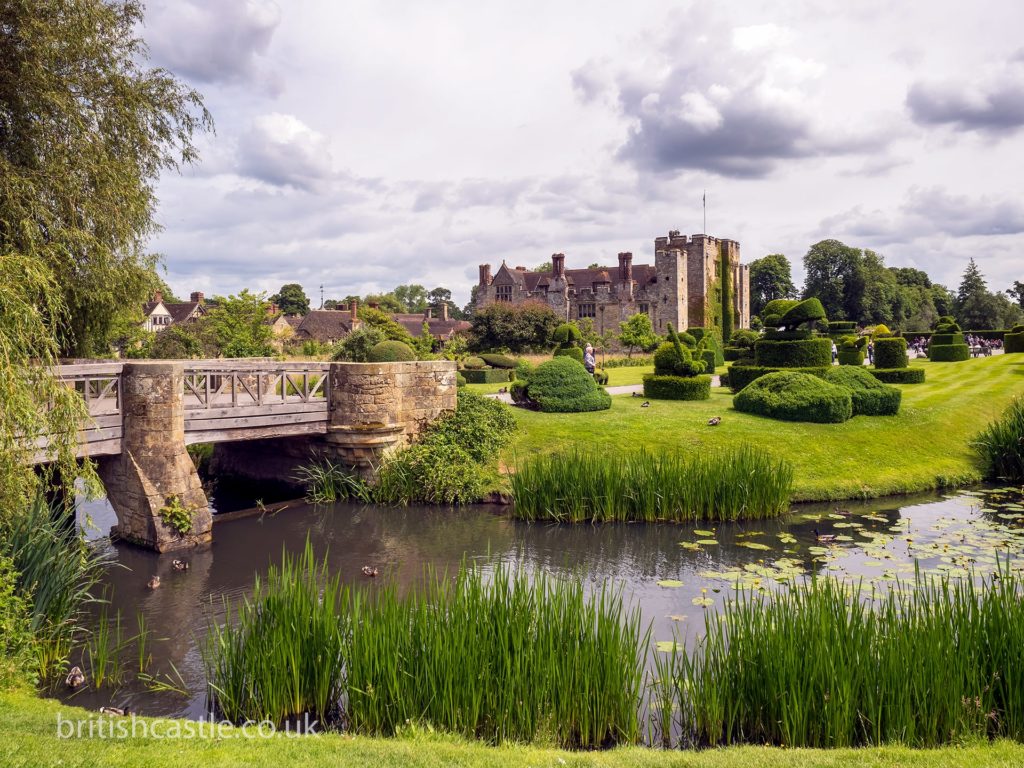
Hever Castle
Hever Castle, a moated manor in the Weald near Edenbridge, was the childhood home of Anne Boleyn, and Henry VIII came courting here in the years before their marriage upended England. The castle was later restored by the American millionaire William Waldorf Astor, who added the gardens and the Italianate loggia that visitors see today.
Walmer Castle
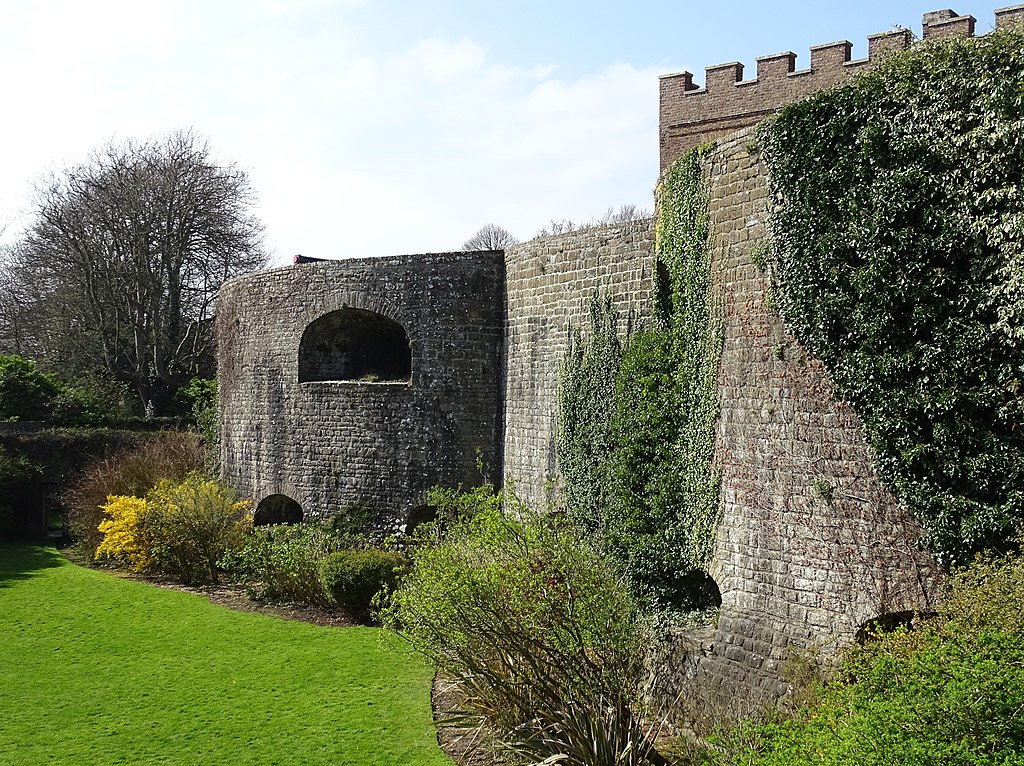
Walmer Castle began in 1539 as one of Henry VIII’s artillery forts guarding the Downs anchorage, and became the official residence of the Lords Warden of the Cinque Ports. William Pitt the Younger and Winston Churchill both held the post, and the Duke of Wellington died here in 1852. His room, and a pair of the original Wellington boots, can still be seen, and the gardens alone justify the trip.2
Upnor Castle
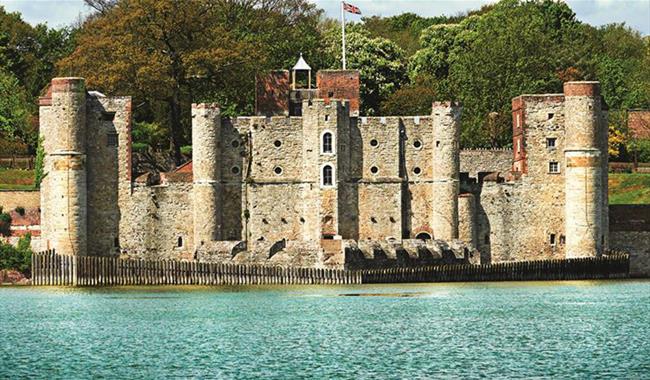
Upnor Castle is an Elizabethan artillery fort on the Medway, built from 1559 to protect the warships moored off the dockyard at Chatham. It failed its one great test: in 1667 the Dutch fleet sailed past it up the Medway, burned the English fleet at anchor and towed away the flagship, the Royal Charles, in one of the worst humiliations in the Royal Navy’s history.
More Castles in Kent
Kent has far more castles than we have covered in depth. These are the ones most worth knowing about.
Deal Castle is Walmer’s larger sister fort, a mile up the coast. Built in the same programme of 1539-40, its six-bastioned rose shape makes it the most complete and most striking of Henry VIII’s Device Forts.
Canterbury Castle keeps the shell of one of England’s earliest Norman stone keeps, begun soon after the Conquest, a short walk from the cathedral.
Tonbridge Castle has one of the finest 13th-century gatehouses in the country, built by the de Clare family beside the River Medway.
Saltwood Castle, near Hythe, is remembered as the castle where the four knights stayed the night before riding to Canterbury to murder Thomas Becket in 1170. It is privately owned and rarely open.
Scotney Castle, near Lamberhurst, is a ruined 14th-century moated castle standing in the gardens of a Victorian country house, now cared for by the National Trust and among the most photographed spots in Kent.
Sandown Castle, the third of the Downs forts alongside Walmer and Deal, has almost entirely vanished, lost to coastal erosion, with only fragments remaining at the north end of Deal.
Which Kent Castle Should You Visit?
For sheer scale and depth of history, Dover, and allow a full day. For the medieval real thing, Rochester’s keep is as good as Norman England gets. For a family day out, Leeds has the grounds, the maze and the full attraction treatment. For Tudor history, pair Hever with Walmer and Deal, which between them cover Anne Boleyn’s world and the forts her daughter’s father built. Upnor is the quiet one, and all the better for it.
Visiting
Dover, Walmer, Deal and Upnor are cared for by English Heritage, and Rochester Castle is part of the English Heritage family too, so a membership works hard in this county. Leeds and Hever are independently run with their own tickets. The castles cluster conveniently: Rochester and Upnor are ten minutes apart on the Medway, and Dover, Walmer and Deal line up along the east coast. Just over the county border, the 1066 country of East Sussex has its own set, covered in our guide to the castles of East Sussex.