Perched on top of a volcanic rock overlooking the River Forth, Stirling Castle is one of the most impressive castles in Scotland.
There is archaeological evidence that there was a settlement here as far back as the 7th century and it is thought that the Romans may also have recognised the importance of the site and had a fortress here.
Famous for its links to William Wallace and Robert the Bruce, the castle guarded the main crossing of the Forth and was fought over throughout the Wars of Scottish Independence. It also saw the coronations and baptisms of Scottish monarchs including Mary, Queen of Scots.
What to see at Stirling Castle
Stirling Castle is one of the largest and best preserved castles in Scotland, and most of what you see today was built by the Stewart kings between the late 15th and early 17th centuries.
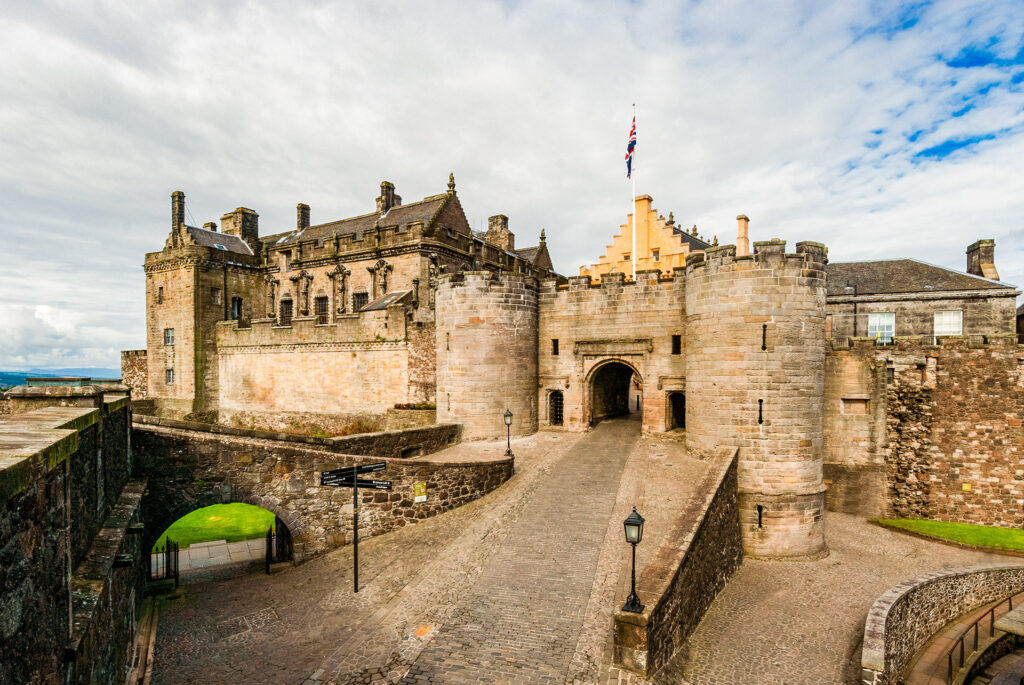
The Great Hall, completed around 1503 for James IV, is the largest medieval banqueting hall ever built in Scotland, around 125 feet long and 36 feet wide. After decades as an army barracks it was restored and reopened in 1999, its exterior finished in the striking golden limewash it would have had when new.
The Royal Palace, built for James V in the late 1530s, is one of the finest Renaissance buildings in Britain. A major restoration completed in 2011 returned its six royal apartments to how they may have looked in the 1540s, complete with hand-woven recreations of the Hunt of the Unicorn tapestries. Look up in the King’s Presence Chamber for the Stirling Heads, carved oak portrait medallions that once decorated the ceiling.
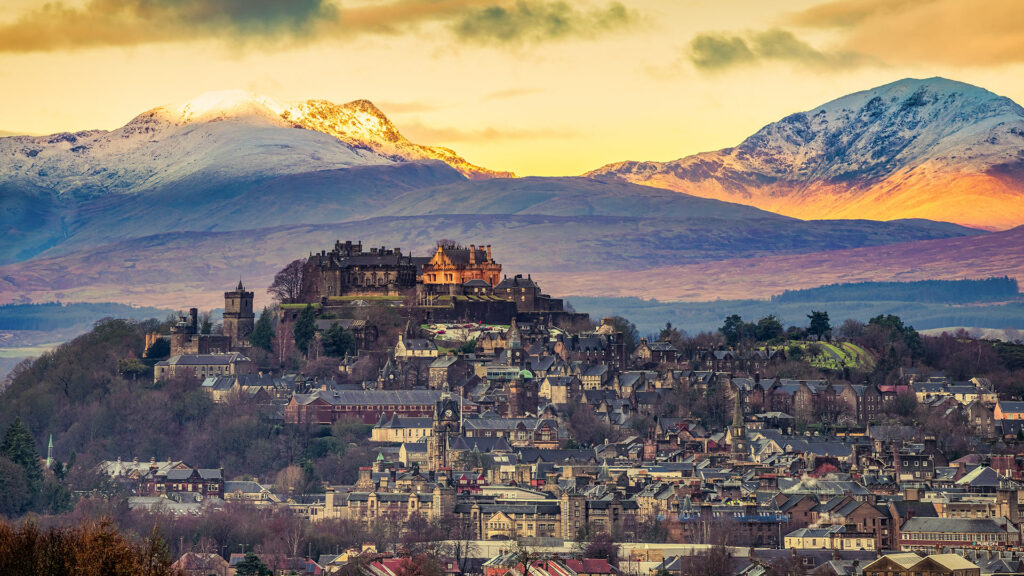
Beyond the Palace and Great Hall are the Chapel Royal, built in 1594 for the baptism of Prince Henry, the restored Great Kitchens, and the regimental museum of the Argyll and Sutherland Highlanders. The castle walls give wide views over the carse of the Forth, taking in the National Wallace Monument and the site of the Battle of Stirling Bridge.
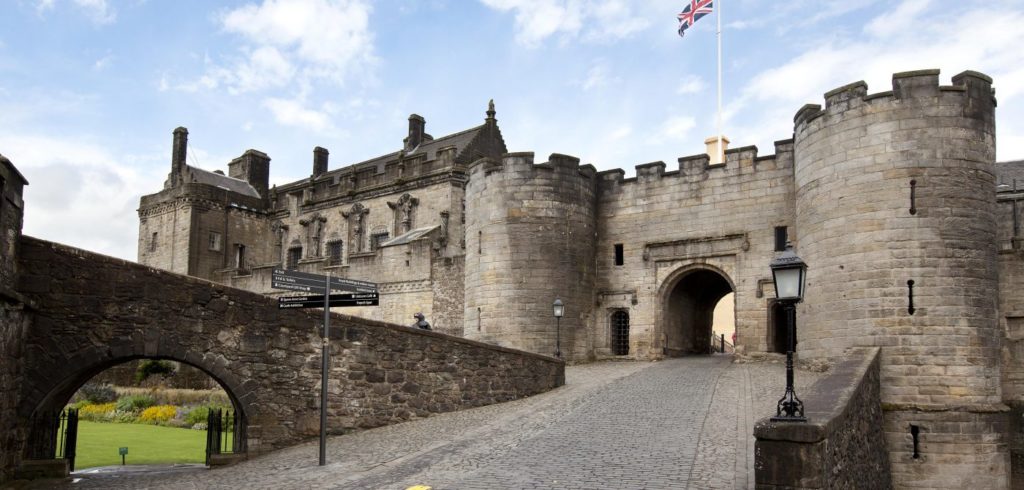
King James IV built the gatehouse that leads from the outer bailey to the castle. The gateway was flanked by four circular towers. Today only the southern Prince’s Tower, the gateway and part of the curtain wall remain.
Stirling Castle and the Wars of Independence
Stirling sits at the lowest crossing point of the River Forth, the gateway between the Lowlands and the Highlands, which made the castle the most fought-over stronghold in Scotland.
In 1297 William Wallace and Andrew Moray destroyed an English army at the Battle of Stirling Bridge, fought within sight of the castle walls, and the castle fell back into Scottish hands. It changed hands repeatedly until 1304, when it was the last major stronghold holding out against Edward I. The garrison endured a four month siege in which Edward deployed the Warwolf, said to be the largest trebuchet ever built, and famously refused the garrison’s surrender until he had used it.
Ten years later the castle produced the most celebrated battle in Scottish history. By 1314 Stirling was one of the last castles in English hands, and Edward Bruce had struck a bargain with its commander: if an English army did not relieve the castle by midsummer, it would surrender. Edward II marched north to relieve it, and Robert the Bruce destroyed his army at Bannockburn, just south of the castle, in June 1314. The castle surrendered, and Bruce had its defences slighted so the English could not use it again.
The castle changed hands once more when the English victory at Halidon Hill in 1333 allowed them to retake Stirling, which they held until 1342.
Stirling Castle History
The first recorded castle at Stirling dates from the early 12th century, during the reign of King Alexander I, who endowed a chapel here and died at the castle in 1124. The castle has a rich history having undergone several successful sieges.
Stirling Castle was occupied by English soldiers between 1174 and 1189 under the terms of the Treaty of Falaise between King Henry II and William the Lion of Scotland.
Mary, Queen of Scots, spent much of her childhood at Stirling and celebrated her coronation in the Chapel Royal in 1543.
During the reign of King James VI, the castle suffered attack on three occasions between 1571 and 1585 from Scots factions. In 1594, King James ordered the construction of a new Chapel Royal to celebrate the christening of his son Prince Henry. This replaced the medieval chapel to the north of the inner bailey.
Stirling was successfully besieged by Oliver Cromwell’s parliamentarian forces in 1651. The last siege at the castle was in 1746 when Bonnie Prince Charlie and the Jacobites were unsuccessful in their attempt to take control of the castle.
Between 1800 and 1964 the castle was an army barracks owned by the British army. During this time the castle saw many alterations; the great hall was turned into an accommodation block, the Royal Palace into the officer’s mess and the Kings old building was transformed into an infirmary.
Who lived in Stirling Castle?
Stirling was a favourite residence of the Stewart monarchs and served as a royal nursery for generations of Scottish heirs. James II and James III were both born within its walls in the 15th century (some sources place James III’s birth at St Andrews). James IV, James V and James VI all spent much of their childhoods here.
Mary, Queen of Scots was crowned in the castle’s Chapel Royal in September 1543, aged just nine months, and spent her early childhood at Stirling before being sent to France. Her son James VI was baptised at the castle in 1566 and raised here under the scholar George Buchanan, and in 1594 James built the present Chapel Royal for the baptism of his own son, Prince Henry.
After the union of the crowns in 1603 the royal court moved to London and Stirling’s days as a royal home were over. From 1800 to 1964 the castle served as the depot of the Argyll and Sutherland Highlanders, whose regimental museum remains in the King’s Old Building today.
Visiting Stirling Castle
Stirling Castle stands above the old town of Stirling, about 35 minutes by train from both Glasgow and Edinburgh, and the castle is a steep ten minute walk up from the station. It is cared for by Historic Environment Scotland and is open daily year round. Opening times and admission details are on the official Stirling Castle website: https://www.historicenvironment.scot/visit-a-place/places/stirling-castle/
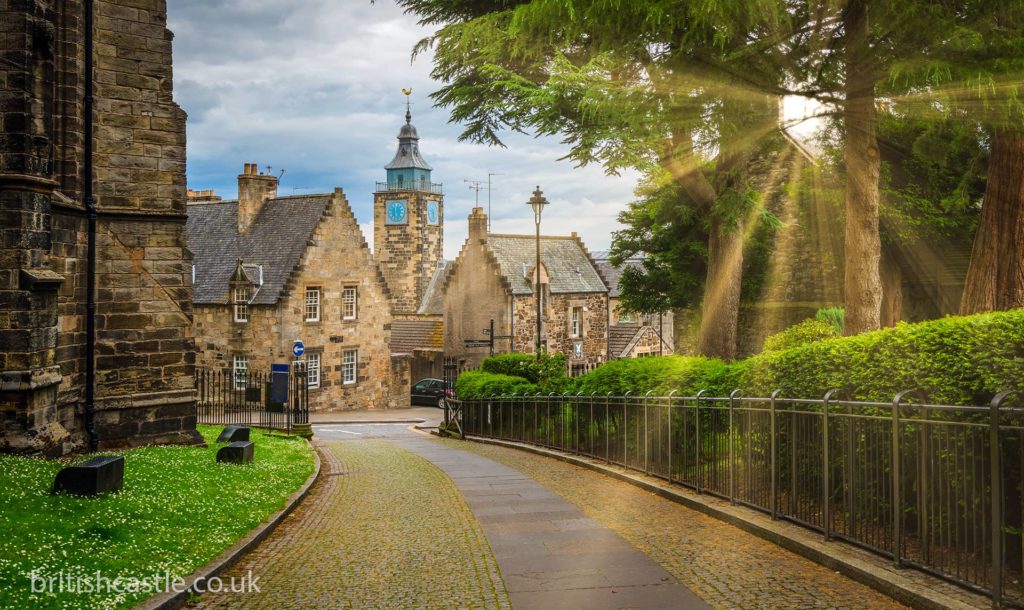
Allow two to three hours to see the Palace, Great Hall, Chapel Royal and museum. The Church of the Holy Rude, where the infant James VI was crowned in 1567, is a short walk downhill from the esplanade.
Read about other Scottish Castles here.