Leeds Castle in Kent, located in South East England, is not anywhere near Leeds in Yorkshire.
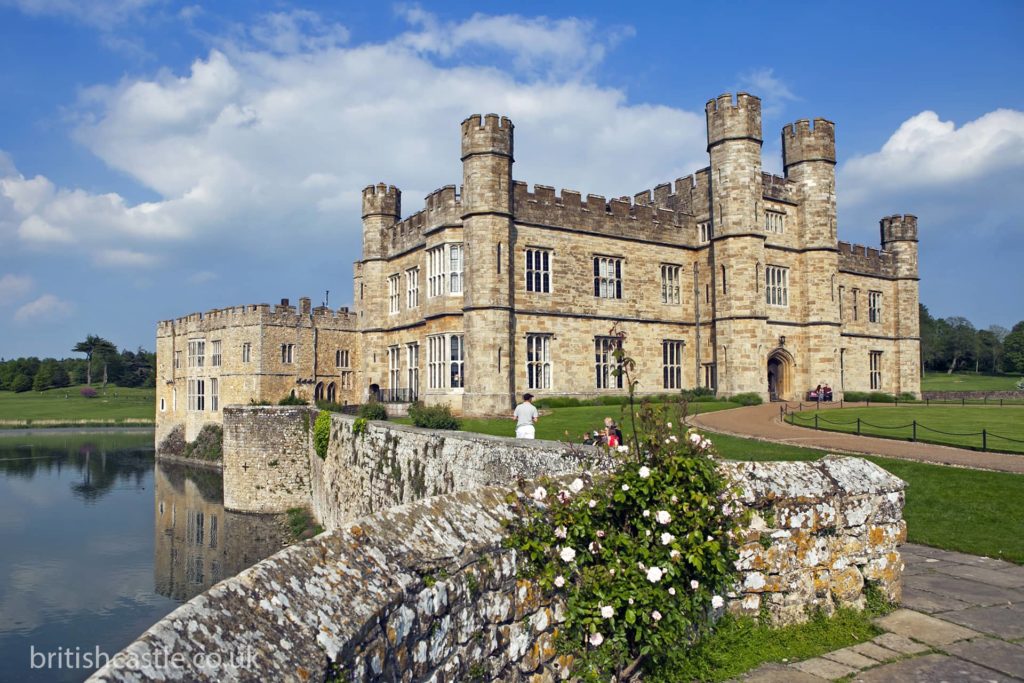
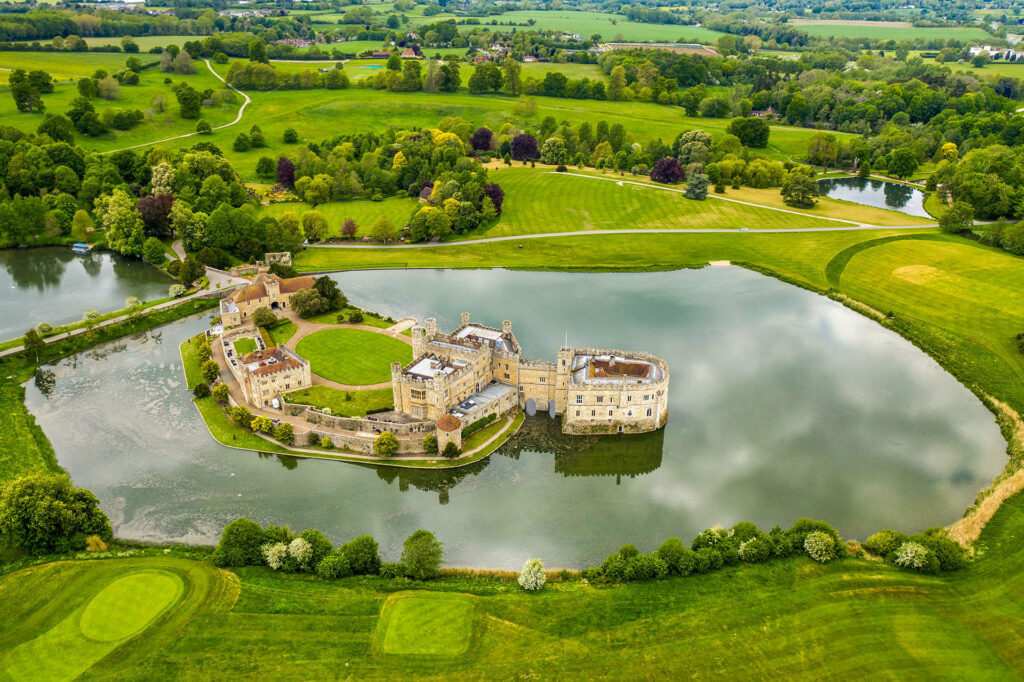
It stands on 2 islands in a lake along the River Len approximately 4 miles outside of Maidstone in Kent, uniquely set on two islands which offer a distinctive and picturesque setting.
Why is Leeds Castle not in Leeds?
The castle takes its name from the small village of Leeds in Kent, a few minutes down the road, and has no connection to the city of Leeds in Yorkshire. The village appears in the Domesday Book as Esledes, and the name is thought to derive from Ledian, the Saxon nobleman who built the first wooden fortification here in 857. The castle is roughly 4 miles south east of Maidstone and about 40 miles from London, some 200 miles from its Yorkshire namesake.
Leeds Castle History
The first stone castle at Leeds was built around 1119 by Robert de Crevecoeur, a Norman baron, replacing the earlier Saxon fortification. In 1278 it passed to the Crown under Edward I, who transformed it into a fortified palace for his queen, Eleanor of Castile, and it remained royal property for almost 300 years. Henry VIII spent lavishly converting it from fortress to palace for Catherine of Aragon. In 1552 Edward VI granted the castle to Sir Anthony St Leger, and it stayed in private hands, passing through the Culpeper, Fairfax and Wykeham Martin families, until the 20th century. Unlike many English castles it survived the Civil War intact, having been used by Parliamentarian forces rather than besieged by them.
Originally established as a Norman stronghold, it is a medieval fortress, regarded as one of the loveliest castles in the world, and takes its name from a 9th century Saxon nobleman, Ledian, who constructed the first wooden fortress on the site in 857.
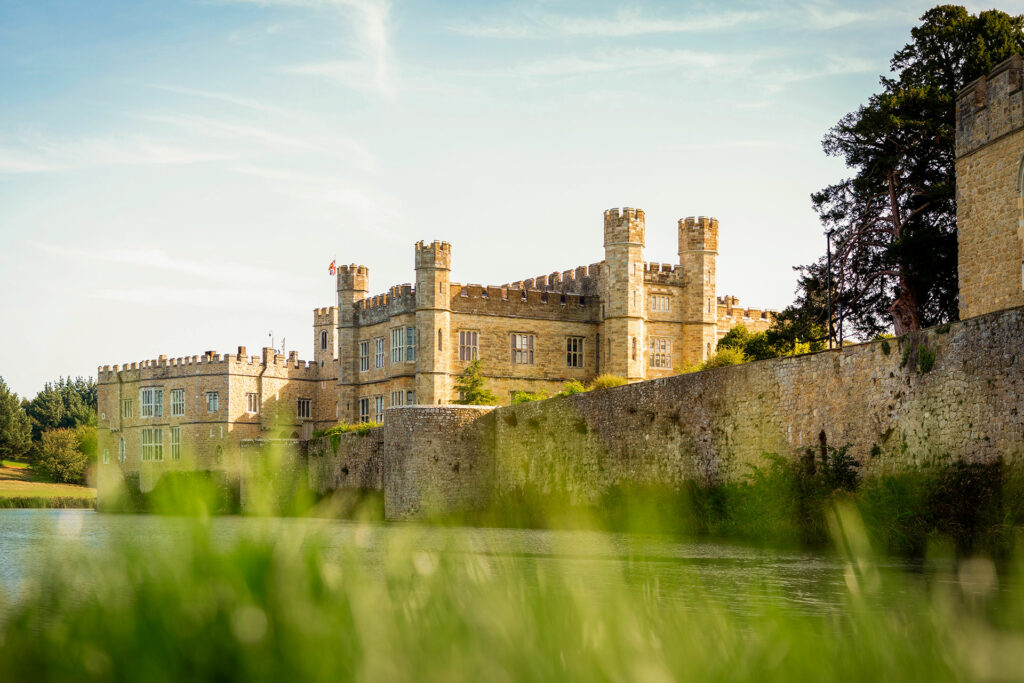
Its river location meant that fresh supplies and reinforcements could be delivered in times of warfare thus preventing the occupants from being starved into submission. Leeds was a royal palace, owned by the crown from 1278 to 1552; it was frequently visited by the medieval Kings and Queens of England.
The castle is made up of four forts, each of which was capable of defending itself. The entrance closest to the shore is known as the barbican. It was reached by one of three causeways that each had a drawbridge, entrance, gateway and portcullis. A stone bridge then links the barbican to the central island.
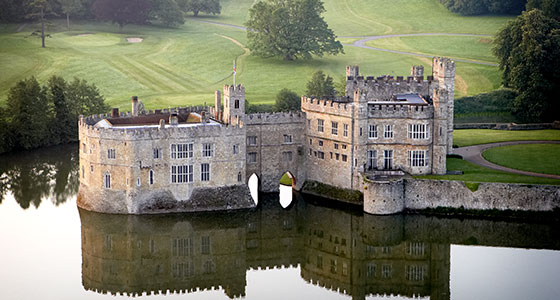
The central island was surrounded by a stone wall that reached fifteen feet high and contained the constables tower and a modern mansion house. Towards the south of this island there were 2 defensive towers; the maiden’s tower and the water tower.
The medieval keep, known as the Gloriette in memory of Queen Eleanor, is situated on the smaller of the 2 islands. Built by King Edward I, it consists of a D shaped tower that contained the great hall and residential accommodations.
As well as its architecture, regal interiors and family treasures, Leeds Castle is famous for the 500 acres of landscaped parkland that surround it and include a maze, aviary, grotto, and vineyard. The castle grounds allow visitors to stroll, explore, and enjoy a variety of activities and accommodations, such as glamping and holiday cottages, providing a unique experience for guests.
Who lived in Leeds Castle?
Leeds Castle is sometimes called the Ladies’ Castle because of the succession of medieval queens who held it, usually as part of their dower. Eleanor of Castile and Margaret of France, the two queens of Edward I, were followed by Isabella of France, Joan of Navarre, Anne of Bohemia and Catherine de Valois. Catherine of Aragon, Henry VIII’s first queen, is the resident most visitors remember, and Elizabeth I was held here for a time before her coronation.
The castle’s last private owner was Olive, Lady Baillie, an Anglo-American heiress who bought it in 1926 and spent decades restoring it, filling the interiors with French furniture and hosting film stars and politicians. On her death in 1974 she left the castle to the charitable foundation that still runs it.
Leeds Castle photos


Is Leeds Castle National Trust or English Heritage?
Neither. Leeds Castle is owned and run by the Leeds Castle Foundation, an independent charity set up under Lady Baillie’s will, and it has been open to the public since 1976. National Trust and English Heritage memberships do not give free entry here.
Unusually, a standard ticket gives unlimited admission to the castle and grounds for a full year, although special evening events are charged separately. Current opening times and admission details are on the official Leeds Castle website: https://www.leeds-castle.com