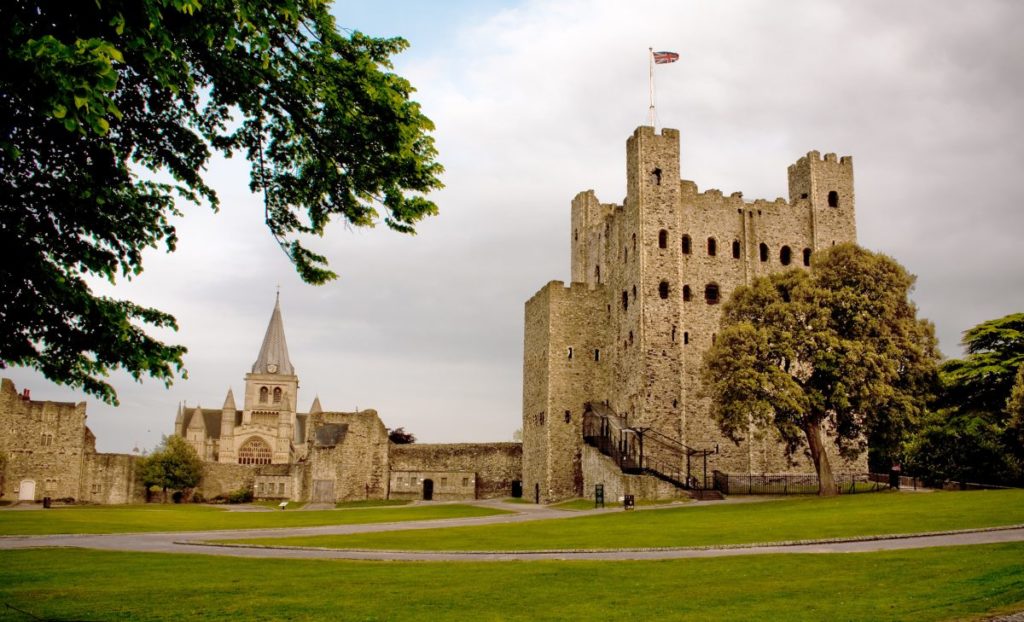
Rochester Castle was one of the first English castles to be rebuilt in stone. It is located on Medway River, a few miles upstream from nearby Upnor Castle.
It stands alongside Rochester Cathedral, which at times is referred to as its twin. There had been a Roman fort in the area although there is now little evidence of these original buildings.
Today what remains is one of the best-preserved and grandest examples of Norman castles in the British Isles.
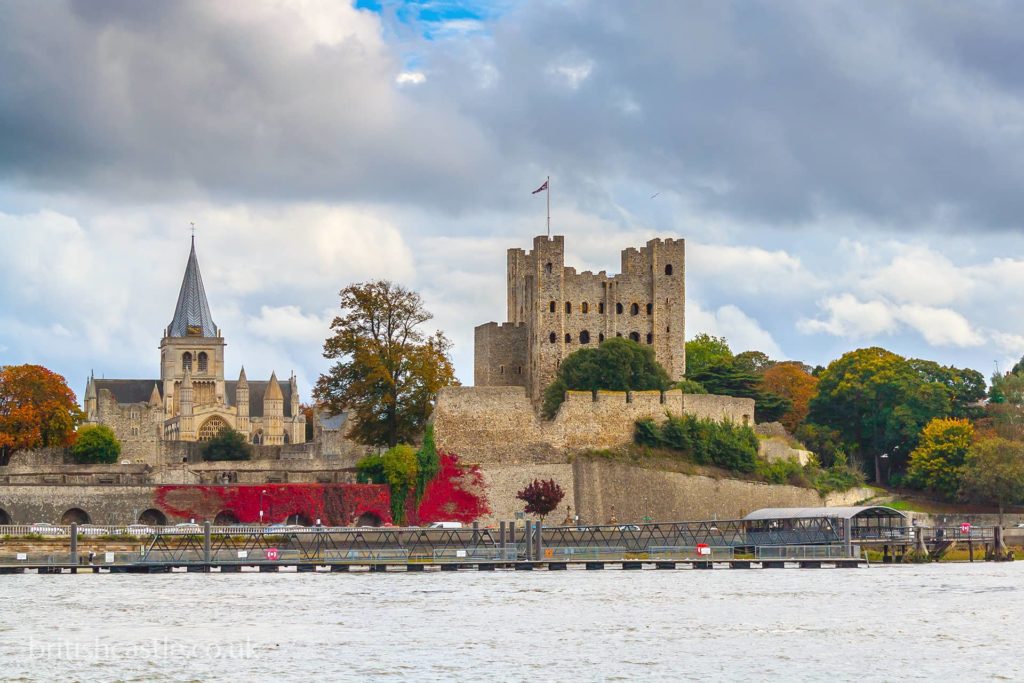
The tallest castle keep in England
At 113 feet, the keep at Rochester is the tallest surviving castle keep in England. It is around 70 feet square with walls up to 12 feet thick, built from Kentish ragstone with dressings of Caen stone shipped from Normandy. Inside, the keep was divided by a cross-wall from top to bottom, a feature that would prove decisive in the castle’s most famous siege.
Three of the four corner towers are the original Norman square design. The fourth, at the south-east corner, is round. The mismatch is not a design quirk. It is battle damage, and the story behind it is one of the most dramatic in English history.
The Siege of 1215: King John and the fat of forty pigs
In October 1215, months after sealing Magna Carta, King John was at war with his barons. A rebel garrison under William d’Aubigny held Rochester Castle against him, blocking the road between London and the channel ports, and John besieged it in person.
His stone-throwing engines made little impression on the keep, so John turned to mining. His engineers dug beneath the south-east corner tower, propped the tunnel with timber, and packed it with the fat of forty pigs, requisitioned by royal writ. When the props were fired, the corner of the keep came crashing down.
Even then the garrison fought on, retreating behind the massive cross-wall inside the keep and holding half the building. Starvation did what mining could not, and the defenders surrendered in late November after nearly two months. The fallen corner was rebuilt in the following decades as the round tower you see today, a shape better able to resist mining, which is why one corner of a square Norman keep is cylindrical.
Rochester Castle Photos
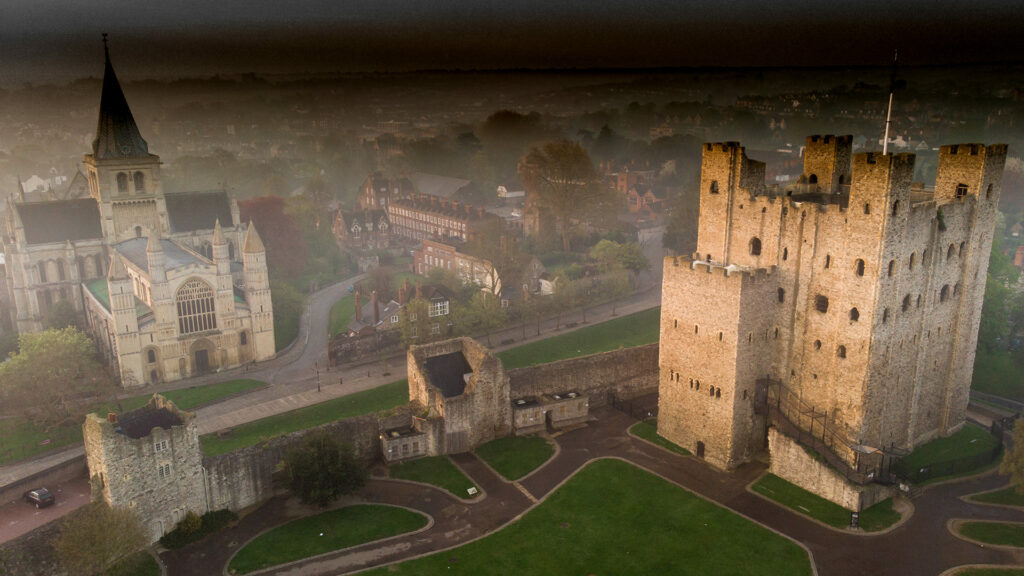
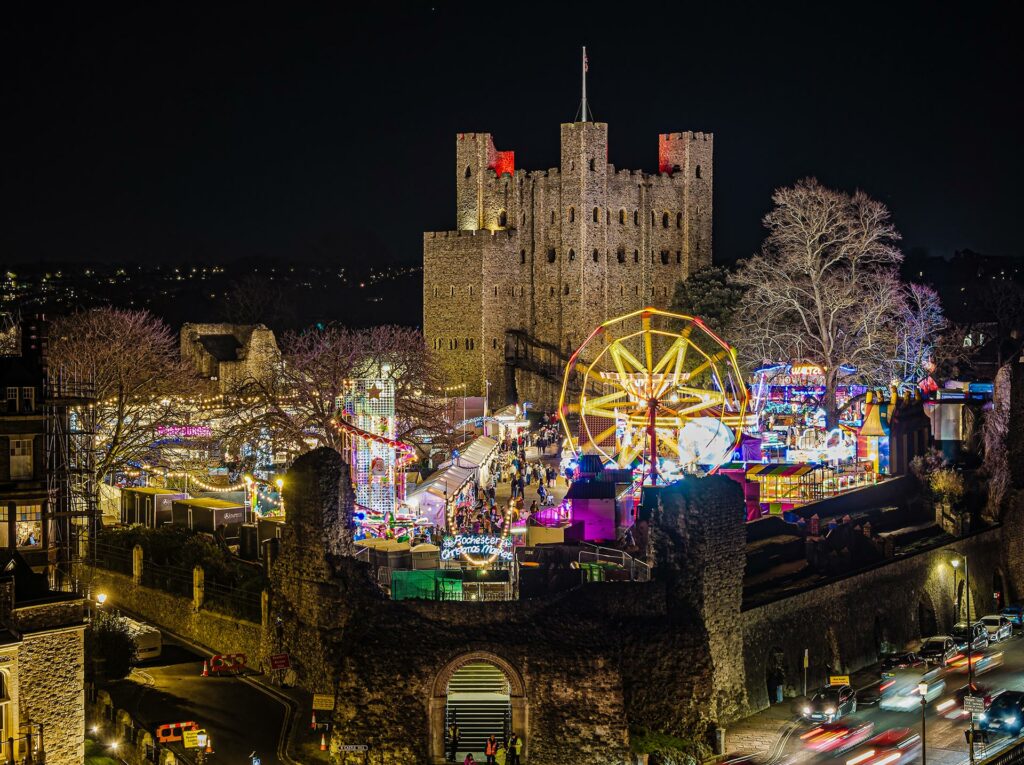
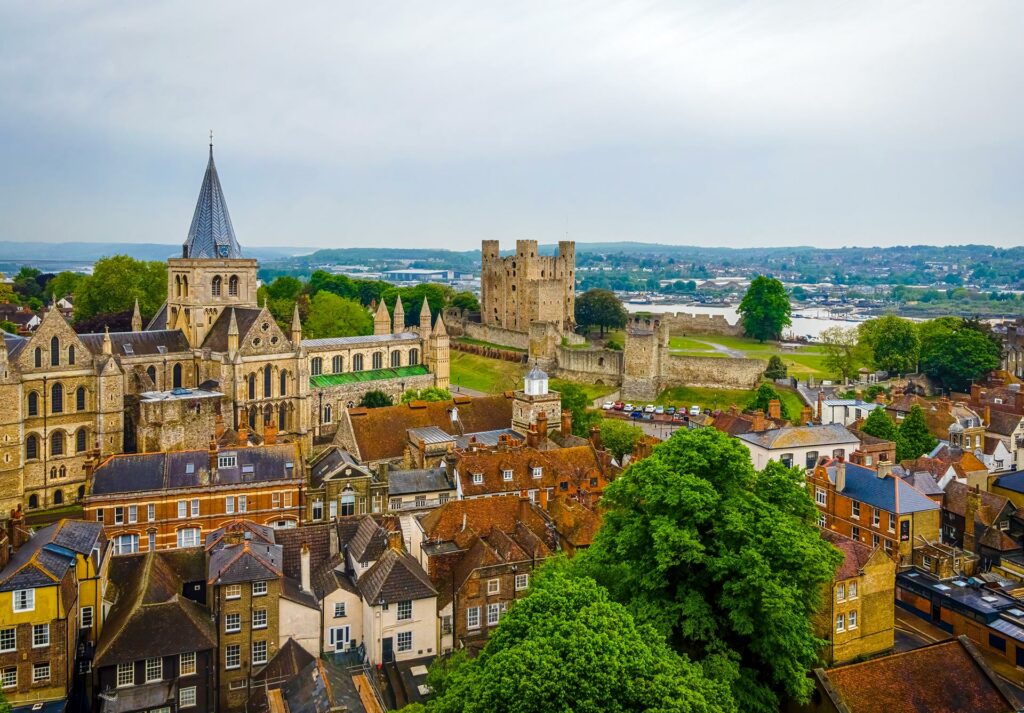

History of Rochester Castle
The castle guards the point where Watling Street, the old Roman road from London to Dover, crosses the River Medway, which is why there were defences here long before the Normans. The first castle was raised soon after the Conquest, and from about 1087 Bishop Gundulf, one of William the Conqueror’s finest architects and builder of the Tower of London’s White Tower, rebuilt it in stone.
The castle saw its first siege as early as 1088, when rebels supporting Odo of Bayeux held it against William Rufus and were starved into surrender.
In 1127 Henry I granted custody of the castle to the Archbishops of Canterbury, and it was Archbishop William de Corbeil who began the great keep that dominates the site today.
After the great siege of 1215, the castle was attacked again in 1264, when rebel forces under Simon de Montfort and Gilbert de Clare stormed the outer defences during the Second Barons’ War. The keep held out, but the damage went un-repaired for more than a century and the castle slowly deteriorated, until Edward III undertook a major programme of rebuilding and restoration. By 1400 Rochester Castle was once again in working order.
By the 17th century the castle was in decline once more. The keep was burned out and the site quarried for building materials. In 1870 the grounds were leased to the city and opened as a public park, which they remain today.
Visiting Rochester Castle
Rochester Castle stands in the centre of Rochester, Kent, on the east bank of the Medway, directly opposite Rochester Cathedral. The castle is managed by English Heritage and the surrounding gardens are a public park, so you can walk the grounds freely and pay to go into the keep itself.
Rochester is an easy day out from London, with direct trains from the capital, and the castle is a short walk from the station through the old high street. It pairs naturally with the cathedral next door, and Upnor Castle is a few miles downstream on the opposite bank. For more castles in the county, see our guide to the castles of Kent.
Opening times, admission charges and further information are available from English Heritage.