Walmer Castle in Kent has lived two very different lives. It began in 1539 as one of Henry VIII’s artillery forts, built to fight off a feared Catholic invasion. It ended up as the official residence of the Lords Warden of the Cinque Ports, a country house whose residents included William Pitt the Younger, the Duke of Wellington and Sir Winston Churchill. Wellington died here in 1852, and his room is preserved much as he left it.
Why Henry VIII Built Walmer Castle
After Henry VIII broke with Rome, England faced the threat of invasion by the Catholic powers of France and Spain. Henry responded with a chain of artillery forts along the south coast, and three of them went up side by side on the Kent shore at Walmer, Deal and Sandown. Together they guarded the Downs, the sheltered anchorage between the coast and the Goodwin Sands where entire fleets could ride out bad weather, and where an invasion fleet could just as easily gather.
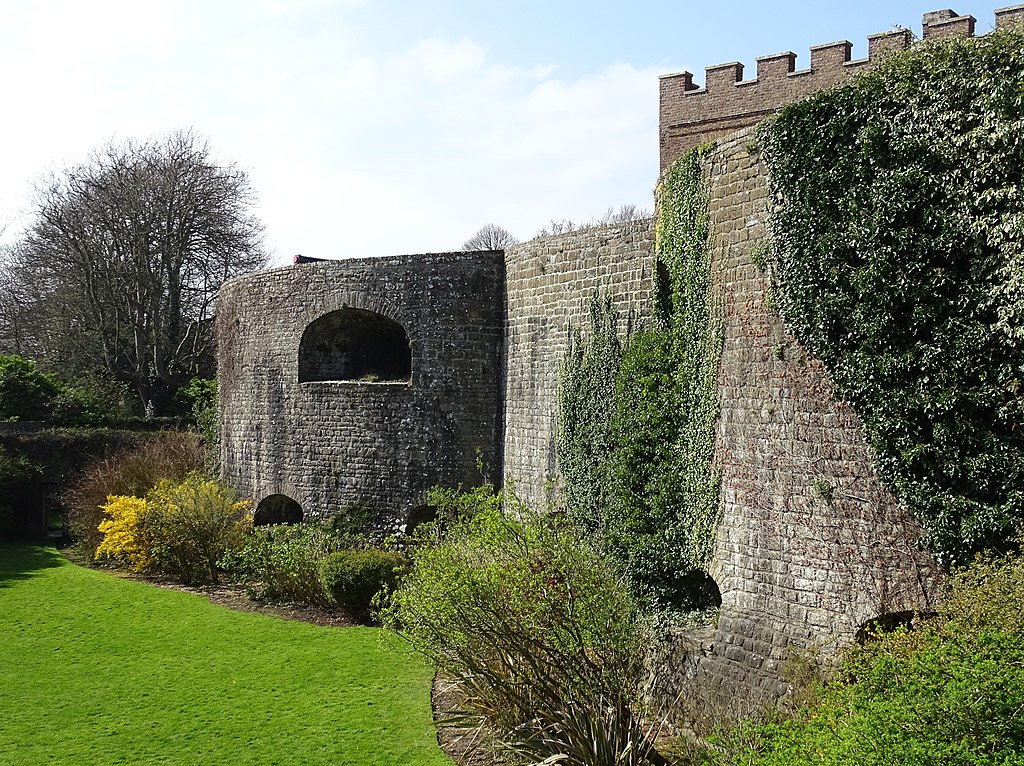
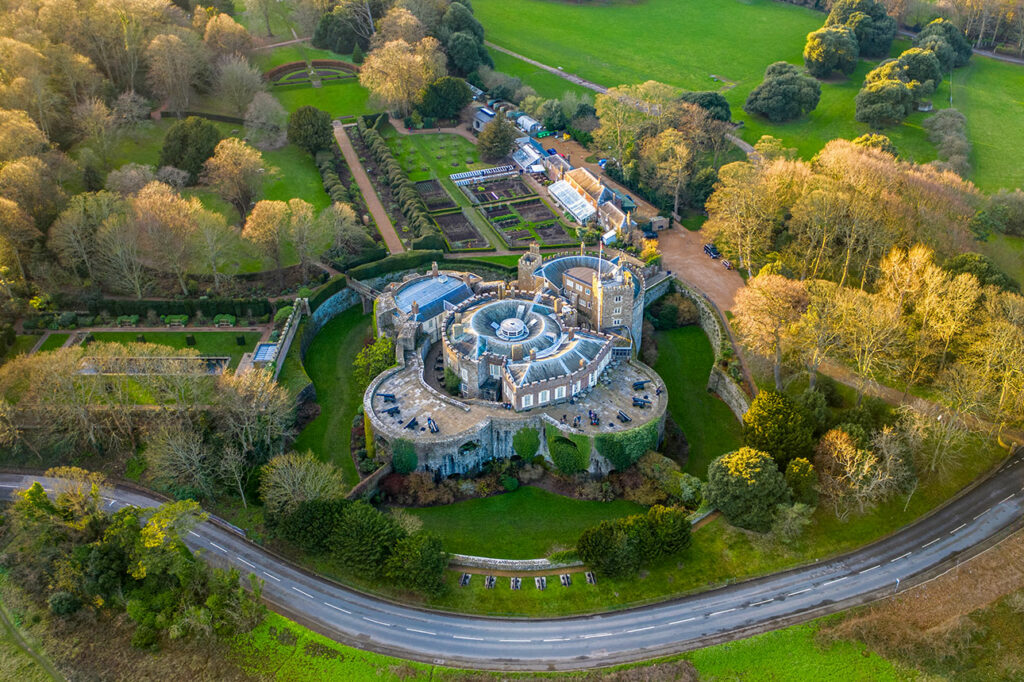
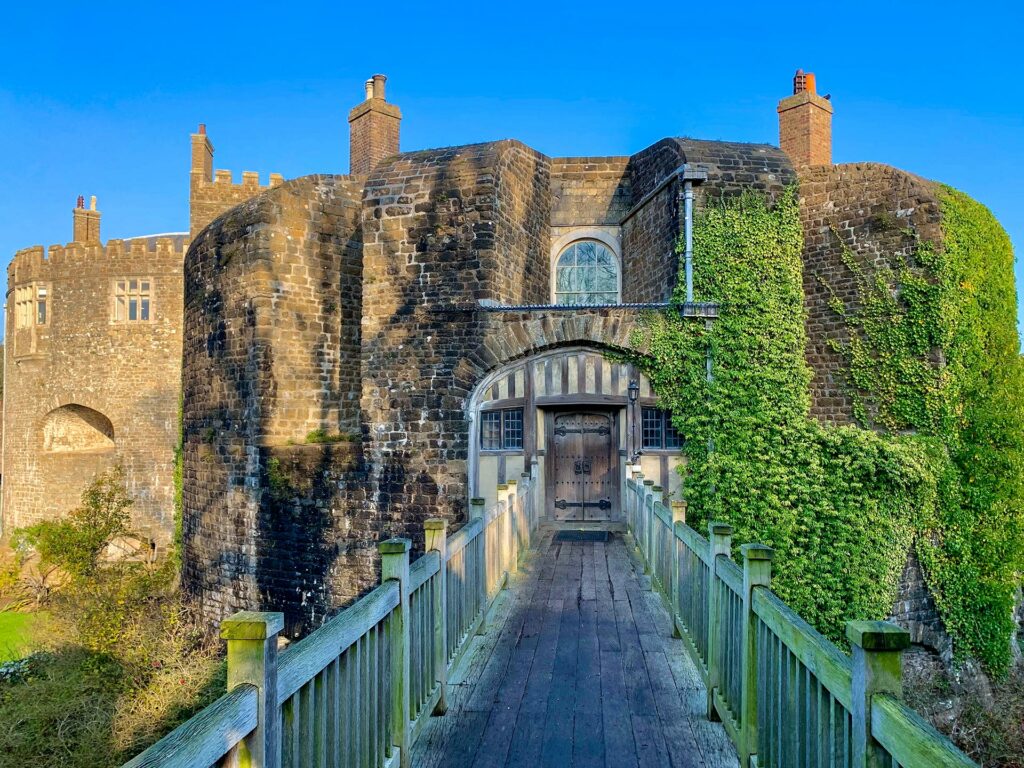
Walmer was built low and round, a completely different shape from the tall square keeps of medieval castles. A circular keep sits at the centre, surrounded by a courtyard and a concentric outer wall with four squat, semi-circular bastions. The rounded walls were designed to deflect cannon fire, and the fort bristled with guns of its own, mounted on the keep, the bastions and within the casemates. The northern bastion doubled as the gatehouse.
The Siege of 1648
Walmer saw its only real fighting a century later, during the Second Civil War. In the summer of 1648 Kent rose against Parliament, and sailors from the fleet anchored in the Downs mutinied and handed Walmer, Deal and Sandown to the Royalists. Parliament sent Colonel Nathaniel Rich to win them back. Walmer held out for the best part of a month before surrendering on 12 July 1648, and Deal and Sandown fell in the weeks that followed.
Home of the Lords Warden of the Cinque Ports
From 1708 Walmer Castle became the official residence of the Lord Warden of the Cinque Ports, an ancient office once responsible for the defence of the south east coast and by then a prestigious honour. Successive Lords Warden softened the fort into a country house, adding comfortable rooms and laying out the gardens.
William Pitt the Younger held the post while serving as Prime Minister, and his niece Lady Hester Stanhope helped shape the gardens during his time here. The Duke of Wellington became Lord Warden in 1829 and grew genuinely fond of Walmer, describing it as his favourite residence. He died here on 14 September 1852. His room is preserved with its original furnishings, including the armchair in which he died and a pair of the original Wellington boots. Later Lords Warden included Sir Winston Churchill, appointed in 1941, and Queen Elizabeth The Queen Mother, who held the office from 1978 until 2002 and visited regularly. The Queen Mother’s Garden was created in 1997 to mark her 95th birthday.
The Gardens
Walmer’s gardens are as much a reason to visit as the castle itself. Highlights include the Broadwalk with its billowing cloud-pruned yew hedge, the kitchen garden, and the Queen Mother’s Garden. It is a strange and pleasing contrast: a squat Tudor gun fort sitting in the middle of one of Kent’s loveliest gardens.
Visiting Walmer Castle
Walmer Castle stands on the seafront at Walmer, just south of Deal in east Kent. It is cared for by English Heritage, and their website has current opening times and prices. Deal Castle, its sister fort, is a short walk up the coast, and Dover is only a few miles further on for Dover Castle. For more castles in the county, see our guide to the castles in Kent.