Grosmont Castle stands above the River Monnow in northern Monmouthshire, one of the famous Three Castles of Gwent alongside White Castle and Skenfrith Castle. It saw real fighting twice, in 1233 and 1405, and in between it was rebuilt as a residence fit for the House of Lancaster. Henry of Grosmont, one of the greatest Englishmen of the Middle Ages, was born here. Today the ruins are in the care of Cadw and are free to visit.
The Three Castles
The Normans pushed into this corner of Wales soon after the Conquest, and the earthwork castles at Grosmont, Skenfrith and White Castle are usually attributed to William fitz Osbern, Earl of Hereford, who led the advance until his death in 1071. His son Roger de Breteuil forfeited the family lands after joining the Revolt of the Earls against King William in 1075, and the castles passed to the Crown.
The three sites guarded the routes between Hereford and the Welsh interior, and their value lay in working together. Henry I granted them to his official Pain fitz John, and after the Welsh risings that followed the king’s death they returned to royal hands. From 1138 they were held together as a single lordship, and they stayed that way for centuries. That is why they are still known simply as the Three Castles.
Hubert de Burgh’s Stone Castle
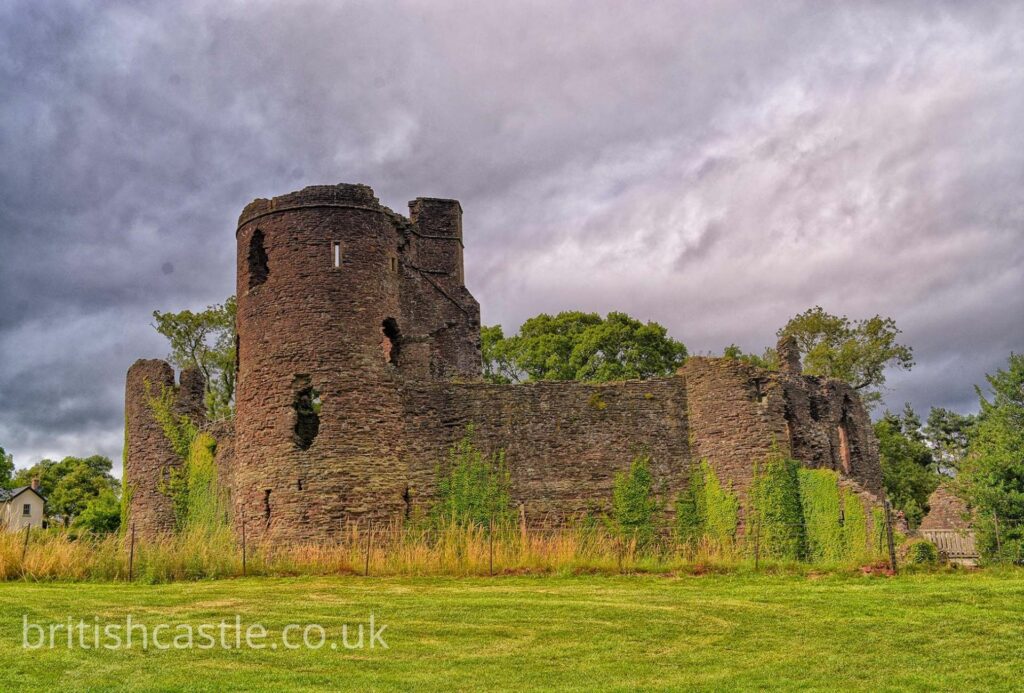
Grosmont owes its stone buildings to Hubert de Burgh, one of the most powerful men in the kingdom under King John and the young Henry III. Granted the Three Castles in 1201, he began with the great hall block, whose long wall still dominates the site. His career had its interruptions, including a spell as a prisoner of war in France and the temporary loss of his castles, but once they were back in his hands he completed the defences: a curtain wall, round towers and a gatehouse, finished by about 1232. After Hubert’s fall from favour the castles passed briefly through other hands, and a chapel was added in 1239.
The Battle of 1233
In November 1233 Henry III led an army into the region against Richard Marshal, Earl of Pembroke, who had risen against the king in alliance with the Welsh prince Llywelyn ab Iorwerth. The royal army camped in the fields below Grosmont Castle. Marshal’s forces fell on the camp at night, and although the castle itself held, the king’s army was routed and fled, abandoning its baggage. It was a humiliation for Henry rather than a bloodbath, but Grosmont had earned its place in the history of the Marshal war.
Henry of Grosmont and the Great Chimney
In 1267 Henry III granted the Three Castles to his son Edmund, Earl of Lancaster, and Grosmont settled into life as a Lancastrian residence. Edward I’s conquest of Wales in 1282 removed much of the castle’s military purpose, and the family rebuilt it for comfort instead. In the first half of the 14th century the castle gained a suite of fine apartments, and with them the tall octagonal chimney that is still Grosmont’s most distinctive feature, one of the finest medieval chimneys in Britain.
Around 1310 Henry of Grosmont was born here. He became the first Duke of Lancaster, Edward III’s greatest captain in the early campaigns of the Hundred Years War, a founder member of the Order of the Garter and the author of a devotional book, the Livre de Seyntz Medicines. His daughter Blanche married John of Gaunt, and their son took the throne as Henry IV, bringing the Three Castles to the Crown as part of the Duchy of Lancaster.
Owain Glyndŵr and the Battle of Grosmont, 1405
Grosmont’s last fight came during the revolt of Owain Glyndŵr. In March 1405 a large Welsh force commanded under Rhys Gethin attacked and burned the town of Grosmont. A relief force sent by Prince Henry, the future Henry V, caught the Welsh army and destroyed it. The prince wrote to his father the king reporting the great slaughter inflicted, and some accounts put the Welsh dead in the hundreds. The battle was one of the turning points of the revolt, and it was fought in the fields around the castle walls.
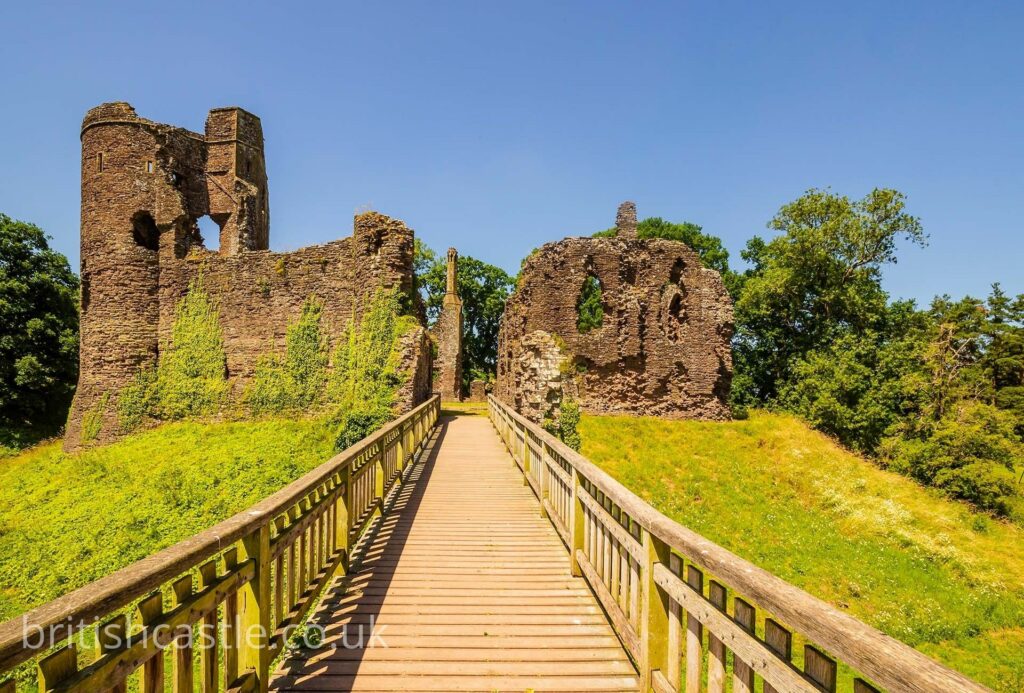
After that, Grosmont slipped quietly out of history. The castle decayed through the Tudor period, its bridge collapsing in 1563, and by the 17th century it was a ruin. The outer walls, the hall block and the great chimney survived.
Visiting Grosmont Castle
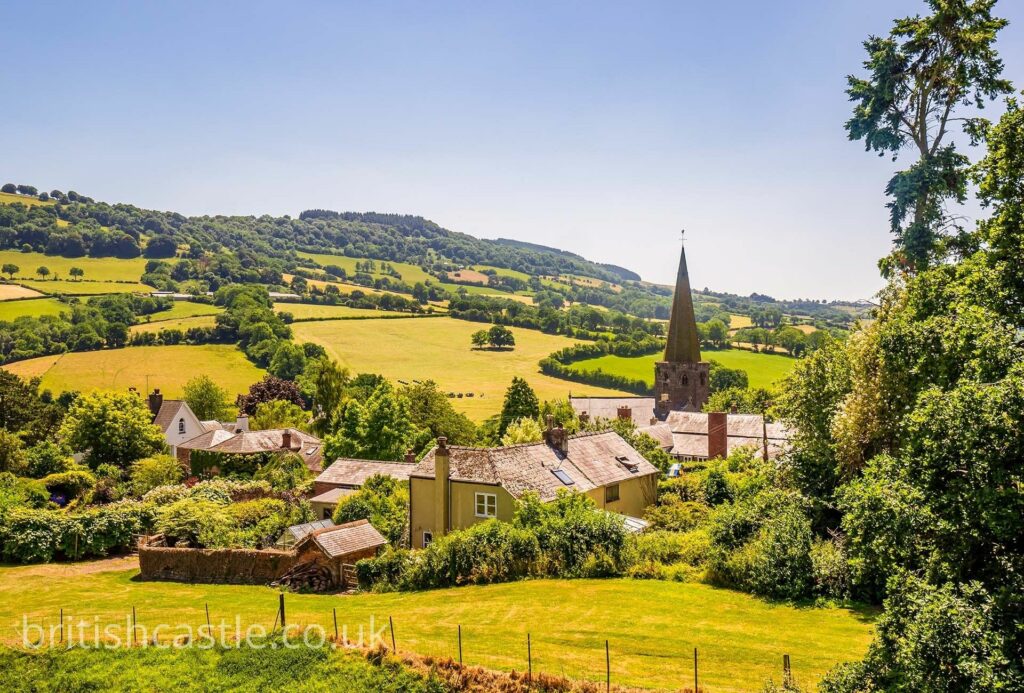
Grosmont Castle sits behind the village of Grosmont, in the Monnow valley between Abergavenny and Hereford. The ruins are in the care of Cadw, entry is free, and the site is open access. The village itself is worth a wander, and the castle makes a natural stop on the Three Castles Walk, a circular trail of around eighteen miles linking Grosmont with Skenfrith Castle and White Castle. For more of the country’s fortresses, see our guide to the castles in Wales.