Upnor Castle is an Elizabethan artillery fort on the west bank of the River Medway in Kent, built to protect the warships moored off the royal dockyard at Chatham. It is best remembered for the one occasion its guns were really needed. In June 1667 a Dutch fleet sailed up the Medway, burned the pride of the English navy at anchor and towed away the flagship, in what is still counted among the worst defeats in the Royal Navy’s history.
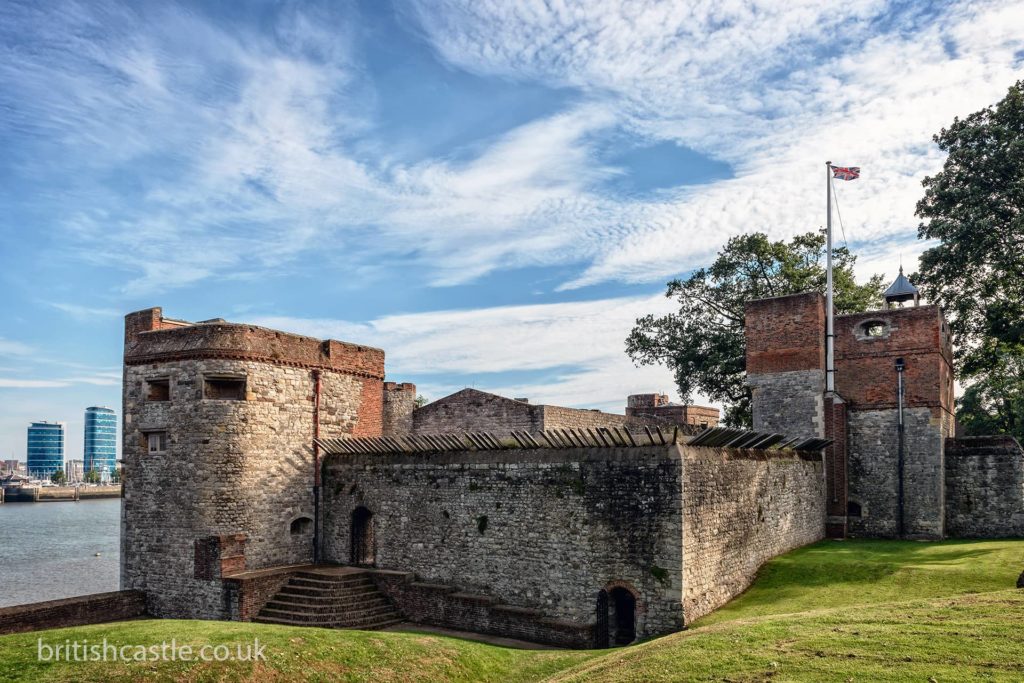
An Elizabethan Fort for a New Kind of War
By the 1550s the Medway had become the navy’s favourite anchorage, and the growing dockyard at Chatham needed protecting. Work on Upnor began in 1559 on the orders of Elizabeth I, to a design by the military engineer Sir Richard Lee, and was completed by 1567.
Upnor looks nothing like a medieval castle because it was never meant to fight one kind of enemy a medieval castle fought. Its business was ships. A triangular water bastion juts into the river to give the guns a clear field of fire up and down the Medway, fronting a rectangular main building that held the living quarters, with the North and South Towers guarding the flanks. Fears of Spanish attack led to the defences being strengthened between 1599 and 1601, adding the gatehouse, ditch and palisade on the landward side.
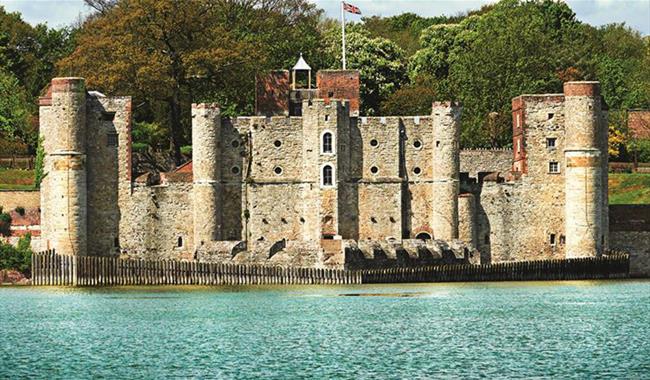
The Raid on the Medway, 1667
Upnor’s test came at the end of the Second Anglo-Dutch War. In June 1667, with peace talks already under way and the English fleet laid up to save money, the Dutch admiral Michiel de Ruyter led his fleet into the Thames estuary, took the fort at Sheerness and pushed up the Medway towards Chatham. A defensive chain had been stretched across the river at Gillingham, and blockships were hurriedly sunk in the channel near Upnor. None of it worked. The Dutch broke through the chain, and on 13 June their fireships came up Upnor Reach under fire from the castle and the nearby shore batteries. The guns could not save the fleet. The great ships Loyal London, Royal James and Royal Oak burned within sight of the castle walls, and the flagship Royal Charles was captured and towed to the Netherlands, where part of her stern is displayed in the Rijksmuseum in Amsterdam to this day.
The castle’s gunners fought hard, and the raid, not any fault of theirs, exposed the truth: Upnor alone could not defend Chatham. New forts were built further downstream, and Upnor’s days as a front-line defence were over.
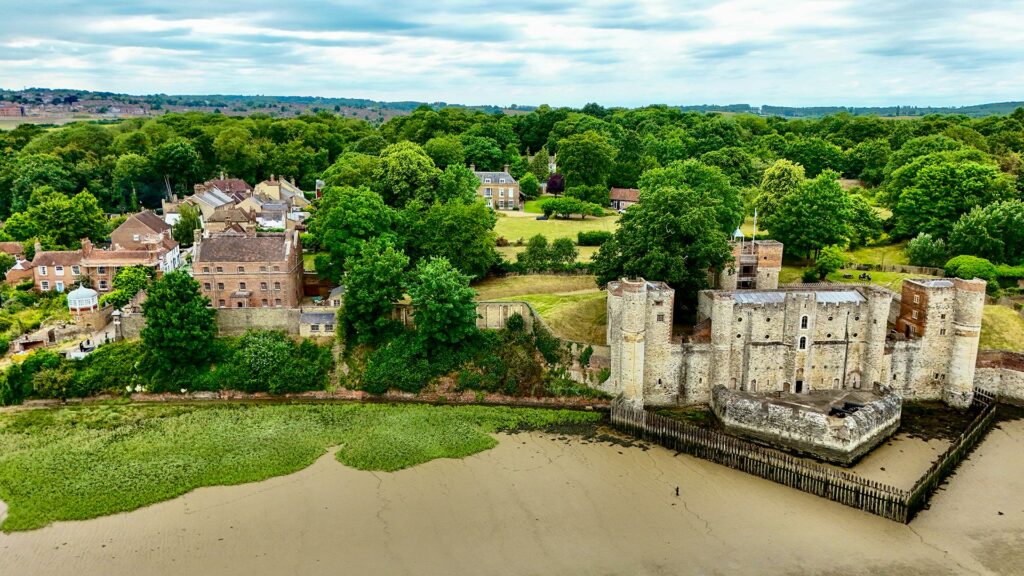
From Fortress to Gunpowder Store
Within a year of the raid Upnor was converted into a magazine and storehouse, holding gunpowder, shot and cannon to resupply the warships that came to Chatham for repair. It took to its second career remarkably well, growing into one of the largest gunpowder magazines in the country, and it kept its naval connections into the 19th century. That unglamorous afterlife is why Upnor survives in such complete condition today: nobody knocks down a working powder store.
Visiting Upnor Castle
Upnor Castle stands at the end of the cobbled high street of Upper Upnor, a village on the Medway a few miles downstream of Rochester Castle, whose Norman keep makes the perfect same-day pairing. The castle is owned by English Heritage and managed by Medway Council, and current opening times and prices are on their websites. The village itself, one street of weather-boarded houses running down to the river, is worth the trip on its own. For more of the county’s fortresses, see our guide to the castles in Kent.